Introduction
When selecting a plastic modular belt, many buyers focus on belt material, surface type, or load capacity. However, one equally important factor is belt pitch. Choosing the correct modular belt pitch directly affects conveyor efficiency, stability, flexibility, and overall service life.
Whether you are designing a new conveyor system or replacing an existing belt, understanding modular belt pitch helps ensure compatibility with sprockets, conveyor layouts, and production requirements.
In this guide, we’ll explain what modular belt pitch is, why it matters, and how to choose the right pitch for your conveyor system.
What Is Modular Belt Pitch?
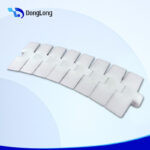
Modular belt pitch refers to the distance between the centers of two adjacent hinge rods in a plastic modular belt. It is one of the key dimensions used to classify modular belts.
Pitch determines how the belt engages with the sprockets and how smoothly it travels around the conveyor.
Common modular belt pitches include:
- 8 mm
- 12.7 mm (0.5 inch)
- 25.4 mm (1 inch)
- 38.1 mm (1.5 inch)
- 50.8 mm (2 inch)
Different pitches are designed for different conveying applications.
Why Is Belt Pitch Important?
The belt pitch influences several aspects of conveyor performance.
Conveyor Flexibility
Smaller pitch belts can bend around smaller sprockets, making them ideal for compact conveyor systems.
Larger pitch belts require larger sprockets but offer greater strength for heavy-duty applications.
Load Capacity
Generally, larger pitch modular belts provide higher load capacity because they use stronger modules and larger hinge connections.
Small pitch belts are better suited for lightweight products and precision conveying.
Product Stability
Products with small dimensions require belts with smaller pitch to provide better support.
Large pitch belts may leave larger openings that are not suitable for small products.
Conveyor Speed
High-speed production lines often use smaller pitch belts because they provide smoother movement and reduced vibration.
Common Modular Belt Pitch Sizes
8 mm Pitch
Suitable for:
- Small electronic components
- Precision assembly
- Pharmaceutical products
Advantages:
- Smooth conveying
- Small transfer gaps
- High precision
12.7 mm (0.5″) Pitch
One of the most popular modular belt pitches.
Suitable for:
- Food processing
- Beverage production
- Packaging
- Bakery
Advantages:
- Excellent flexibility
- Compact conveyor design
- Wide range of accessories
25.4 mm (1″) Pitch
Suitable for:
- General industrial conveying
- Logistics
- Warehouse automation
- Packaging systems
Advantages:
- Good balance between strength and flexibility
- Durable performance
- Wide application range
38.1 mm (1.5″) Pitch
Suitable for:
- Heavy-duty production lines
- Automotive manufacturing
- Industrial equipment
Advantages:
- High strength
- Long service life
- Excellent impact resistance
50.8 mm (2″) Pitch
Suitable for:
- Heavy industrial applications
- Large products
- Mining
- Construction materials
Advantages:
- Maximum load capacity
- Strong module structure
- Excellent durability
How to Choose the Right Belt Pitch
Consider Product Size
Small products require smaller pitch belts to prevent products from falling between the belt openings.
Examples include:
- Bottles
- Small cartons
- Electronic parts
- Pharmaceutical packaging
Large products can be transported efficiently using larger pitch belts.
Evaluate Product Weight
For heavy products, choose a larger pitch belt with higher strength.
For lightweight products, smaller pitch belts provide smoother operation and better product handling.
Check Conveyor Layout
The conveyor layout also affects pitch selection.
Straight conveyors can use almost any pitch size.
Curved or compact conveyors often require smaller pitch belts because they can wrap around smaller sprockets.
Consider Conveyor Speed
High-speed conveyors usually benefit from smaller pitch belts because they provide:
- Reduced vibration
- Better tracking
- Lower noise
- Smoother conveying
Match the Correct Sprocket
Every modular belt pitch must match the corresponding sprocket.
Using an incorrect sprocket can cause:
- Belt slipping
- Poor tracking
- Excessive wear
- Premature failure
Always verify sprocket compatibility before purchasing a modular belt.
Belt Pitch Selection by Industry
| Industry | Recommended Pitch |
|---|---|
| Food Processing | 12.7 mm |
| Beverage | 12.7 mm |
| Bakery | 12.7 mm |
| Packaging | 12.7 mm / 25.4 mm |
| Logistics | 25.4 mm |
| Warehouse Automation | 25.4 mm |
| Automotive | 38.1 mm |
| Heavy Industry | 50.8 mm |
Common Mistakes When Choosing Belt Pitch
Choosing Only Based on Price
Lower-cost belts may not meet your production requirements.
Always prioritize application suitability over price alone.
Ignoring Product Size
Large-pitch belts may not adequately support small products, leading to unstable conveying.
Forgetting Sprocket Compatibility
A modular belt and sprocket must always share the same pitch.
Never install mismatched components.
Not Planning for Future Expansion
If production capacity may increase in the future, choose a belt pitch that can accommodate higher loads and faster speeds.
Tips for Selecting the Best Modular Belt
Before purchasing a modular belt, consider the following:
- Product dimensions
- Product weight
- Conveyor speed
- Conveyor layout
- Operating temperature
- Cleaning requirements
- Required load capacity
- Compatible sprockets
- Future production needs
Discuss these factors with your conveyor supplier to ensure the best solution.
Why Choose DongLong Modular Belts?
DongLong supplies a complete range of plastic modular belts with multiple pitch options for different industries and applications.
Our products offer:
- High-quality engineering plastics
- Precise manufacturing
- Excellent wear resistance
- Food-grade options
- Wide selection of sprockets and accessories
- Custom conveyor solutions
Whether your application involves food processing, logistics, packaging, or heavy industry, our technical team can help you select the most suitable modular belt pitch for optimal conveyor performance.
Conclusion
Choosing the correct modular belt pitch is essential for achieving reliable conveyor performance. The right pitch improves product stability, enhances conveyor efficiency, reduces maintenance, and extends equipment life.
By considering product size, load capacity, conveyor layout, speed, and sprocket compatibility, you can select the ideal modular belt for your production line.
If you need assistance selecting the right modular belt pitch, DongLong offers professional technical support and a complete range of modular conveyor solutions.
Frequently Asked Questions
What is modular belt pitch?
Modular belt pitch is the distance between two adjacent hinge rods in a plastic modular belt. It determines sprocket compatibility and influences conveyor performance.
Which belt pitch is best for food processing?
A 12.7 mm (0.5 inch) pitch is one of the most common choices for food processing because it provides excellent flexibility, smooth conveying, and compatibility with hygienic conveyor systems.
Can I use different sprockets with the same modular belt?
No. The sprocket must match the belt pitch exactly. Incorrect sprockets can cause tracking problems, excessive wear, and conveyor failure.
Does a larger belt pitch mean a stronger belt?
In general, yes. Larger pitch modular belts typically provide higher load capacity and greater strength, making them suitable for heavy-duty industrial applications.
How do I choose the right modular belt pitch?
Consider your product size, product weight, conveyor layout, operating speed, load capacity, and sprocket compatibility. Selecting the correct pitch ensures efficient operation and longer service life.